
How Antelope Canyon Was Formed — and Why It Looks the Way It Does
Antelope Canyon is a slot canyon carved into Navajo sandstone in northern Arizona, just outside the town of Page. It sits on Navajo Nation land, and visiting requires a licensed Navajo guide — no independent access is permitted. That rule exists for both safety and cultural preservation, and it matters more than most visitors realize.
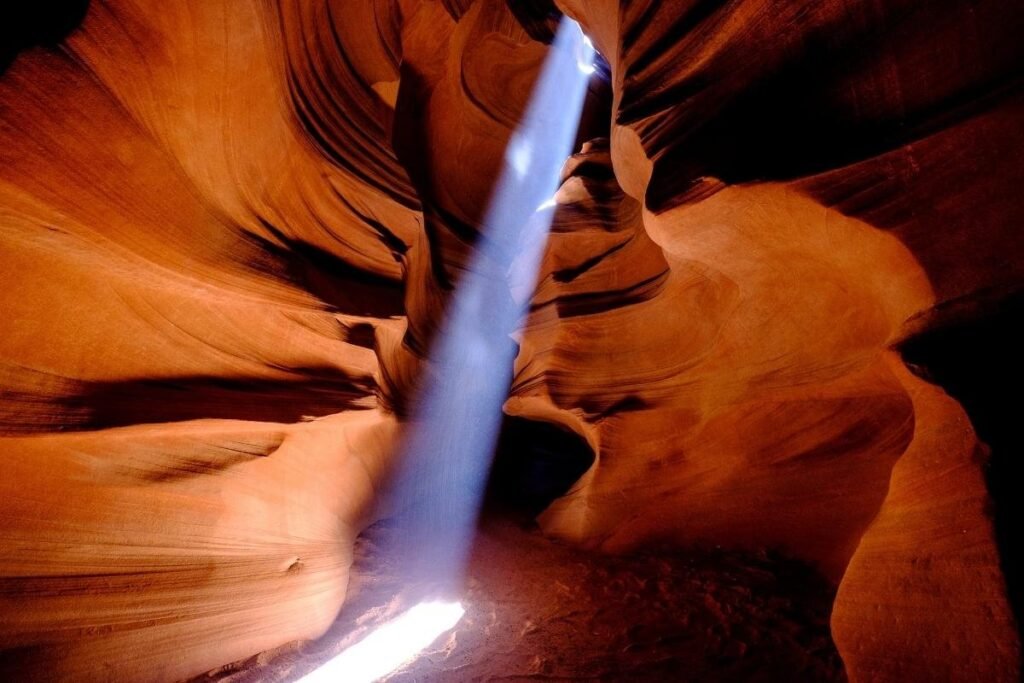
The canyon formed over millions of years through two forces working together: water and wind. Flash floods rushing through the narrow passages smoothed the sandstone walls into flowing, wave-like curves. Wind erosion then polished the surfaces further, producing that signature coral-and-rust color palette. The walls in some sections are only a few feet apart but stretch up to 120 feet high, which is part of what makes the light inside so dramatic.
There are actually two separate canyons — Upper Antelope Canyon (known as The Crack) and Lower Antelope Canyon (known as The Corkscrew). Upper is wider and more accessible, which is why it draws bigger crowds. Lower requires descending narrow staircases and crouching through tight passages, but it rewards visitors with slightly fewer people and equally stunning formations. If you are coming from Las Vegas, a Lower Antelope Canyon and Horseshoe Bend day tour lets you see both landmarks in a single efficient trip.
One detail that catches many visitors off guard: the famous light beams that pour through the ceiling of Upper Antelope Canyon only appear between roughly 10 a.m. and 1 p.m. during summer months, when the sun is high enough to angle directly down through the openings. If you visit outside those hours or in winter, you will still see extraordinary light — just not the vertical beams. Knowing this in advance helps you set realistic expectations and plan your arrival time accordingly.
Practical Things to Know Before You Go
Antelope Canyon sits at roughly 4,000 feet elevation, which surprises visitors who expect desert heat at ground level. Summer days can top 100°F outside, but the canyon interior stays cooler. Bring water regardless — hydration matters on any Arizona trip.
Flash flooding is a genuine risk inside slot canyons. In 1997, a sudden storm miles away sent a flash flood through Lower Antelope Canyon with no warning, killing 11 visitors. Guides are trained to monitor weather conditions and will close the canyon at the first sign of upstream rain. If your guide says it is time to exit, move immediately without question.
Photography inside the canyon is one of the biggest draws for modern travelers. The interplay of light and shadow makes it one of the most photographed locations on Earth. If you want to take it further, an Antelope Canyon night photography tour offers access after hours to capture star trails and long-exposure shots inside the canyon walls — a completely different experience from a daytime visit.
The canyon has no food vendors or restrooms inside. Use facilities in Page before entering. Entrance fees are collected by the Navajo Nation and go directly to tribal resources. Tipping your guide is standard practice and genuinely appreciated — they carry deep knowledge about the geology, history, and stories of the land that makes the visit far richer than simply walking through.
If you want to cover more ground in the region, an Antelope Canyon guided tour from Las Vegas can combine the canyon with other iconic Southwest stops, making the most of a full travel day from the city.